Some seasons feel like a waiting room.
Kids growing up. Business growing. You growing. Yet somehow you still feel like you’re waiting for something magical to happen.
Not in a dramatic “everything is falling apart” way. More like… you’re doing the things. The carpool. The calendar. The responsibilities. The keeping-it-together.
And still, there’s this quiet sense that you’re paused. Like life is happening, but you’re not fully in it.
I know that feeling. And I also know how quickly “later” becomes a habit.
After the kids are older.
After the next launch.
After your body feels more familiar again.
After you finally book the trip.
So here’s what I’m practicing right now (and yes, I’m telling you because I need the accountability too): doing a few small things every day that make me feel like I’m taking care of myself, even on a random weekday.
Not because a random weekday deserves less of me than a Saturday.
Not because I’m trying to become a brand-new person.
But because I’m done treating my life like it hasn’t started yet. Or like I'm waiting for something to happen to me.
If you’re in a transition season, you’re not alone. Really.
And if you’re here because Bette’s “vacation mindset in real life” idea hit you right in the heart, welcome. That’s what we’re building together.
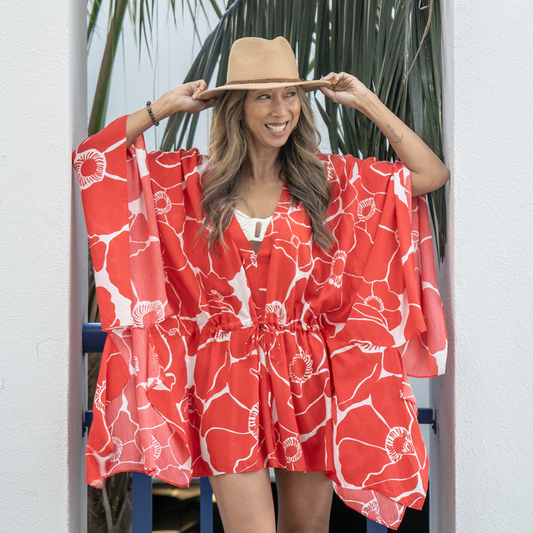
We're a resort wear brand, yes (duh). But Bette is also about permission. Permission to enjoy your life now. Permission to be seen. Permission to stop shrinking until everything feels "perfect."
We’re a resort wear brand, yes (duh). But Bette is also about permission. Permission to enjoy your life now. Permission to be seen. Permission to stop shrinking until everything feels “perfect.”And for me, that permission starts with the smallest daily rituals.
Here are three I’m leaning on right now.
Why small rituals work when big change feels out of reach
Sometimes self-care can feel like another job. Like, “Cool, I’ll add one more thing to my already packed day.”
No thanks.
That’s why my rule is simple: It has to be small enough that I’ll actually do it. Not “when I have time.” Not “when I feel like it.” Not “when I’m on a beach.”
Just today.
Because tiny, consistent actions do something sneaky and powerful. They remind your brain that you’re not on hold. They build momentum. They help you feel like you belong to yourself again.
And when you’re in a waiting-room season, that message matters.
Ritual #1: The 5-Minute Journal (my tiny reset button)
I started using the Five Minute Journal because my brain can feel like a browser with 37 tabs open.
Some are helpful. Some are spiraling. A few are playing music I didn’t choose.
I don’t always have the capacity for a long journaling session, but I can do five minutes. That’s the magic. It’s simple and structured, which is exactly why it works for me. It’s built around quick daily gratitude + intention prompts you can do morning and evening.
Why I do it every day
Because it changes how I walk into (and out of) my day.
Instead of starting already behind, tense, and in reaction mode, I start with a quiet reminder: I can choose a focus. I can name what matters. I can notice what’s good, even if everything isn’t tied up in a neat bow.
It doesn’t erase stress. It just gives me a steering wheel.
And if you’ve ever felt like you’re living in everyone else’s needs and expectations, even a tiny steering wheel is a big deal.
Try it without overthinking it
If you don’t have a journal, you can do this on a sticky note, in your Notes app, or on the back of an envelope you found in the junk drawer. Here are three prompts you can steal:
-
What would make today great? (emotionally, not just on the to-do list)
-
What’s one thing I’m grateful for that I usually rush past? (take a second to feel how it feels to be grateful for it)
-
What is my daily affirmation for today?
Five minutes counts. Especially in a transition season.
Ritual #2: The end-of-day “what went well” list (5–10 wins before bed)
This one is my newest favorite because it’s so simple, and it changes the whole tone of my night.
Before bed, I write 5–10 things that went well that day. They can be small. In fact, I prefer small.
“Made a yummy, healthy lunch.”
“Texted that friend back I've been meaning to text.”
“Felt good in my outfit.”
“Did a supermarket run.”
“Didn’t lose it when I got cut off in traffic.” (Counts.)
Why it helps with sleep (and not just in a fluffy way)
There’s research linking gratitude practices with better sleep quality, including how long it takes to fall asleep. One reason is what’s happening in your mind right before sleep. When you guide your attention toward what went well (instead of letting it spiral), it can shift those pre-sleep thoughts in the right direction.
This tracks for me. I'm the one who used to crawl into bed, and my brain would promptly decide it was the perfect time to replay every awkward moment I've had in the last year. (Can anyone relate?)
This ritual gives my brain a different direction to go in.
Why it helps with mindset (and your real life)
This is not about pretending everything is fine. It’s about training your attention to notice what is working, even while things are still messy.
Over time, that matters because your brain gets good at what you repeatedly ask it to do.
If you keep asking, “What’s wrong?” your brain becomes a constant problem-finder.
If you start asking, “What went well?” your brain gets better at noticing support, progress, goodness, and wins (regardless of how small).
How to do it (my version)
-
Keep a notebook by your bed.
-
Don't think! Just write. Don't spend more than 3 or 4 minutes.
-
Write 5–10 things that went well.
-
Optional (but powerful): write one sentence for why one of them went well. This helps connect your brain to agency, not just luck.
This is especially helpful on “nothing went right” days. Because on those days, your list might look like:
-
I got out of bed.
-
I fed myself.
-
I didn’t quit.
-
I took a shower.
-
I found my keys on the first try. (A miracle.)
Still counts! And sometimes my list looks close to this. And that's OK.
Ritual #3: Somatic orienting (my “I’m safe right now” practice)
This one is so simple that it almost feels too easy… which is exactly why I love it.
Orienting is basically the practice of letting your senses take in your surroundings on purpose, slowly. You’re giving your nervous system real-time information about the present moment.
From a science-y angle: our nervous system is constantly tracking cues of novelty and potential threat (or safety). The “orienting reflex” is a known response where attention shifts toward what’s happening around you so you can assess it. And frameworks like Polyvagal Theory emphasize how cues of safety can help downshift defensive reactions. Mind-blowing!
In plain language: you’re reminding your body, “We are here. We are not back there. We are okay right now.”
How I practice orienting (my exact steps)
-
I feel my feet on the ground.
I notice pressure. Temperature. Contact. I’m not trying to “ground” perfectly. I’m just noticing. -
I notice my breath without changing it.
No fixing. No forcing. Just observing, like, “Oh. That’s what my breath is doing today.” -
I slowly look all around me (up and down, side to side).
I take my time. I let my eyes land on details: a color, a shape, the light coming through a window, a plant, a texture. This is the part that feels like a signal to my system: “See? We’re safe enough to look around.” (Many somatic-oriented resources describe orienting as a way to reconnect to the present environment and support regulation.) -
Then I check in with my body: What do you need?
Water? A stretch? A snack? Less phone? A cry? A walk? A boundary?
I try to listen without judging the answer and give it what it needs.
Why this helps my mindset
Because it pulls me out of the mental waiting room I tend to spend a lot of time in.
It’s a quick pattern interrupt for worry loops. It shifts me from “bracing” to “being here.” And when I do it consistently, I start catching myself earlier, before stress snowballs.
Sometimes it takes 30 seconds. Sometimes it takes 3 minutes. Either way, it reminds me: I’m not powerless. I can come back to myself. I am taking care of myself.
What this has to do with the Bette brand (a lot, actually)
Because Bette isn’t just about what you wear on vacation. It’s about what you wear when life feels like a waiting room.
In waiting-room seasons, style can start to look like one too. You default to whatever is easiest. You dress for function only. You tell yourself you’ll “get back to it” later.
But later gets sneaky.
That’s why we talk about vacation mindset here. Not as a fantasy. As a practice.
Vacation mindset means you don’t wait for permission to enjoy your life. You bring a little pleasure into a regular day. You let yourself feel comfortable, confident, and seen, even if you’re only going to the grocery store.
And yes, getting dressed can be part of that.
Not dressing up for approval.
Dressing in a way that says, “My day counts. I count.”
Even if your plans are school drop-off, errands, work, and sitting in the car for a minute of silence because wow.
That’s the whole point.
If you’re in the waiting room too, try this
Pick one tiny thing.
Make it daily.
Let it be your signal to yourself that you’re not on hold. That you matter.
Maybe it’s your morning journal.
Maybe it’s your bedtime “what went well” list.
Maybe it’s 60 seconds of orienting before you walk into your kitchen like it’s a NASCAR pit stop in the morning.
Maybe it’s putting on something that makes you feel like you again, even if you’re going nowhere special.
Because the “magical thing” you’re waiting for might not be a big event.
It might be the moment you stop waiting.
Question for you
What’s one thing you’re reclaiming for yourself right now?
If you’re nodding along, I’d love for you to stay close. Follow along for vacation mindset in real life, outfit ideas that work beyond the beach trip (we are a resort wear brand, after all 😉), and honest conversations about becoming who you really are. Starting now.
And if you show up at Trader Joe’s and someone asks where you got your outfit, please report back immediately. That is community service.